


10-11-2026, 04:44 PM
I have spent the last two weeks living inside Onimusha: Way of the Sword, and I can already tell it will be one of my defining 2026 gaming memories. Twenty years after the last mainline entry, Dawn of Dreams, Capcom finally returned to the series on September 4, 2026. The game sold over one million copies on day one and earned an 88 Metacritic score, and after twenty-five hours with Miyamoto Musashi, I understand why. The conversation around its genre is loud: some call it a Soulslike, others pure action, and a few insist it is its own niche samurai subgenre. My verdict is simpler: it is an action-adventure swordplay game with light Action RPG layering, built on Capcom's RE Engine. That classification matters, because if you expect a sprawling open-world Soulslike, you will misread its rhythm; if you expect a musou power fantasy, you will die in the first common encounter.
Genre Breakdown: Action-Adventure Meets Swordplay RPG
When I say Way of the Sword is not a Soulslike, I mean it lacks the punishing open-world traversal, arbitrary stat gating, and endless corpse runs that define that subgenre. It is largely linear and story-driven. When I say it is not a musou game, I mean every common enemy encounter demands tactical precision. Button mashing leads to quick death even on normal difficulty. I learned that the hard way against a pair of Genma spearmen in the third hour. The game sits in a rare pocket: classic Capcom action, samurai cinema atmosphere, and a light RPG spine that never overwhelms the swordplay.
Core Combat: Issen Timing, Blaze State, and the Soul Loop
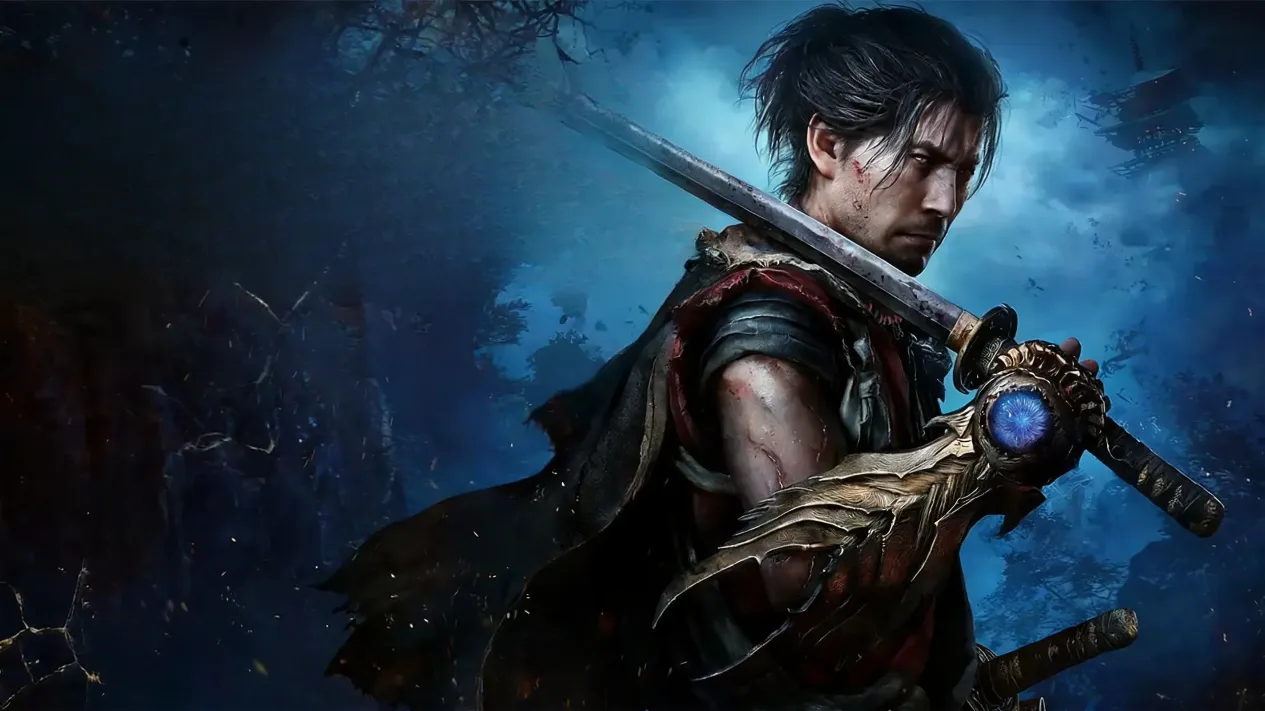
Combat is where the game becomes a ritual. Three signature mechanics carry the entire experience.
Issen: The iconic counter activates when I attack at the exact moment an enemy's strike makes contact. It triggers an instant, soul-shattering kill on all non-boss enemies and chunks 15% of a boss's health bar. The timing window feels like catching a hummingbird mid-flight with chopsticks, but when it lands, I feel like a ghost who has already won the fight.
Break Issen: Prompts pop up when an enemy's Stamina Gauge hits red. I deliver a high-damage finisher that drops extra rare upgrade materials. It is the game's way of rewarding patience without turning boss fights into damage sponges.
Blaze State: Stringing three or more successful parries triggers a 30% attack speed boost for 12 seconds. In that window, I carve through groups like a hot knife through frozen silk.
The Soul Sucking loop adds RPG texture. I use the Oni Gauntlet to absorb Yellow souls for 15-30% health sustain and Red souls for XP and weapon upgrades. It is a resource rhythm that keeps me aggressive. Veterans who master the Reflex Gauge via Perfect Dodges unlock Reflex Combos with 25% time slow. I am not a veteran yet, but I have seen skilled players cut their playthrough time by up to three hours with efficient runs.
New Player-Friendly Features: Oni Vision, Open Areas, and Standalone Story
I never played the four prior Onimusha titles, and I was worried I would be lost. I was not. This entry is a standalone soft reboot, so no prior franchise knowledge is required. The narrative follows Miyamoto Musashi, modeled after legendary actor Toshiro Mifune, as he fights Genma demons in 1604 Kyoto corrupted by Malice. The story is self-contained, and the tone is pure samurai noir.
The new Oni Vision feature is a critical accessibility bridge. It reveals hidden enemies, structural weaknesses, and Malice trails. The community calls overuse of the feature Vision Spam, but it cuts down unforeseen ambushes by 60% for first-time players. I used it heavily in the first five hours, then gradually trusted my own eyes. The game's hybrid structure is mostly linear for its main story, with four large open areas including Kyoto's outskirts. Those areas offer side quests, hidden shrines, and seven optional boss duels for completionists. I have only cleared three of those duels, and each one felt like a separate short story told through swordplay.
Who Should Play It? The Core Selling Points
I recommend this game if you loved Sekiro's parry-heavy precision, Ghost of Tsushima's immersive samurai atmosphere, or classic Capcom action titles like Devil May Cry. The 20-25 hour main runtime respects my time with no filler open-world grind. Optional completionist content adds an extra 8-10 hours for players who want to unlock all weapons and lore entries. I plan to go back for every hidden shrine and every optional duel.
Three editions are available across all platforms:
Edition
Price
Key Extras
Standard
$69.99
Base game
Deluxe
$79.99
Classic Samanosuke Outfit, bonus charms
Premium Deluxe
$89.99
Genma General Armor Skin, digital artbook
I compared regional pricing through my usual key resellers before buying, and I settled on the Deluxe edition because the Classic Samanosuke Outfit felt like a small museum piece for my inventory. If you are on the fence, know that the game is not trying to be a 100-hour open-world epic. It is a focused, 20-25 hour swordfight that respects your reflexes and your calendar.
Final Verdict: A Sharp, Focused Return
Onimusha: Way of the Sword is not a Soulslike, not a musou game, and not a nostalgia cash-in. It is an action-adventure swordplay game with light RPG layers, and it earns its 88 Metacritic score. The Issen timing, the Blaze State parry chains, and the Soul Sucking loop form a combat language that took me ten hours to speak and twenty-five hours to love. If you have been waiting for a samurai action game that trusts you to learn its rhythm, this is the one. I will be replaying it on hard mode, and I suspect I will still flinch every time a Genma spear comes for my throat.
Genre Breakdown: Action-Adventure Meets Swordplay RPG
When I say Way of the Sword is not a Soulslike, I mean it lacks the punishing open-world traversal, arbitrary stat gating, and endless corpse runs that define that subgenre. It is largely linear and story-driven. When I say it is not a musou game, I mean every common enemy encounter demands tactical precision. Button mashing leads to quick death even on normal difficulty. I learned that the hard way against a pair of Genma spearmen in the third hour. The game sits in a rare pocket: classic Capcom action, samurai cinema atmosphere, and a light RPG spine that never overwhelms the swordplay.
Core Combat: Issen Timing, Blaze State, and the Soul Loop
Combat is where the game becomes a ritual. Three signature mechanics carry the entire experience.
Issen: The iconic counter activates when I attack at the exact moment an enemy's strike makes contact. It triggers an instant, soul-shattering kill on all non-boss enemies and chunks 15% of a boss's health bar. The timing window feels like catching a hummingbird mid-flight with chopsticks, but when it lands, I feel like a ghost who has already won the fight.
Break Issen: Prompts pop up when an enemy's Stamina Gauge hits red. I deliver a high-damage finisher that drops extra rare upgrade materials. It is the game's way of rewarding patience without turning boss fights into damage sponges.
Blaze State: Stringing three or more successful parries triggers a 30% attack speed boost for 12 seconds. In that window, I carve through groups like a hot knife through frozen silk.
The Soul Sucking loop adds RPG texture. I use the Oni Gauntlet to absorb Yellow souls for 15-30% health sustain and Red souls for XP and weapon upgrades. It is a resource rhythm that keeps me aggressive. Veterans who master the Reflex Gauge via Perfect Dodges unlock Reflex Combos with 25% time slow. I am not a veteran yet, but I have seen skilled players cut their playthrough time by up to three hours with efficient runs.
New Player-Friendly Features: Oni Vision, Open Areas, and Standalone Story
I never played the four prior Onimusha titles, and I was worried I would be lost. I was not. This entry is a standalone soft reboot, so no prior franchise knowledge is required. The narrative follows Miyamoto Musashi, modeled after legendary actor Toshiro Mifune, as he fights Genma demons in 1604 Kyoto corrupted by Malice. The story is self-contained, and the tone is pure samurai noir.
The new Oni Vision feature is a critical accessibility bridge. It reveals hidden enemies, structural weaknesses, and Malice trails. The community calls overuse of the feature Vision Spam, but it cuts down unforeseen ambushes by 60% for first-time players. I used it heavily in the first five hours, then gradually trusted my own eyes. The game's hybrid structure is mostly linear for its main story, with four large open areas including Kyoto's outskirts. Those areas offer side quests, hidden shrines, and seven optional boss duels for completionists. I have only cleared three of those duels, and each one felt like a separate short story told through swordplay.
Who Should Play It? The Core Selling Points
I recommend this game if you loved Sekiro's parry-heavy precision, Ghost of Tsushima's immersive samurai atmosphere, or classic Capcom action titles like Devil May Cry. The 20-25 hour main runtime respects my time with no filler open-world grind. Optional completionist content adds an extra 8-10 hours for players who want to unlock all weapons and lore entries. I plan to go back for every hidden shrine and every optional duel.
Three editions are available across all platforms:
Edition
Price
Key Extras
Standard
$69.99
Base game
Deluxe
$79.99
Classic Samanosuke Outfit, bonus charms
Premium Deluxe
$89.99
Genma General Armor Skin, digital artbook
I compared regional pricing through my usual key resellers before buying, and I settled on the Deluxe edition because the Classic Samanosuke Outfit felt like a small museum piece for my inventory. If you are on the fence, know that the game is not trying to be a 100-hour open-world epic. It is a focused, 20-25 hour swordfight that respects your reflexes and your calendar.
Final Verdict: A Sharp, Focused Return
Onimusha: Way of the Sword is not a Soulslike, not a musou game, and not a nostalgia cash-in. It is an action-adventure swordplay game with light RPG layers, and it earns its 88 Metacritic score. The Issen timing, the Blaze State parry chains, and the Soul Sucking loop form a combat language that took me ten hours to speak and twenty-five hours to love. If you have been waiting for a samurai action game that trusts you to learn its rhythm, this is the one. I will be replaying it on hard mode, and I suspect I will still flinch every time a Genma spear comes for my throat.